
Most of the softgel brands you see on pharmacy shelves do not own a softgel machine. They own something more valuable: a brand customers trust, and a private label partner who makes the product behind it. Here is how that partnership comes together, step by step.
- Start with a focused range of proven formulations, then add OEM products.
- Lock formulation, shell, size and colour before artwork.
- Make sure your company holds the licences required for the product category.
- Plan for drying and quality release — they are part of the timeline, not delays.
Step 1: Choose a focused first range
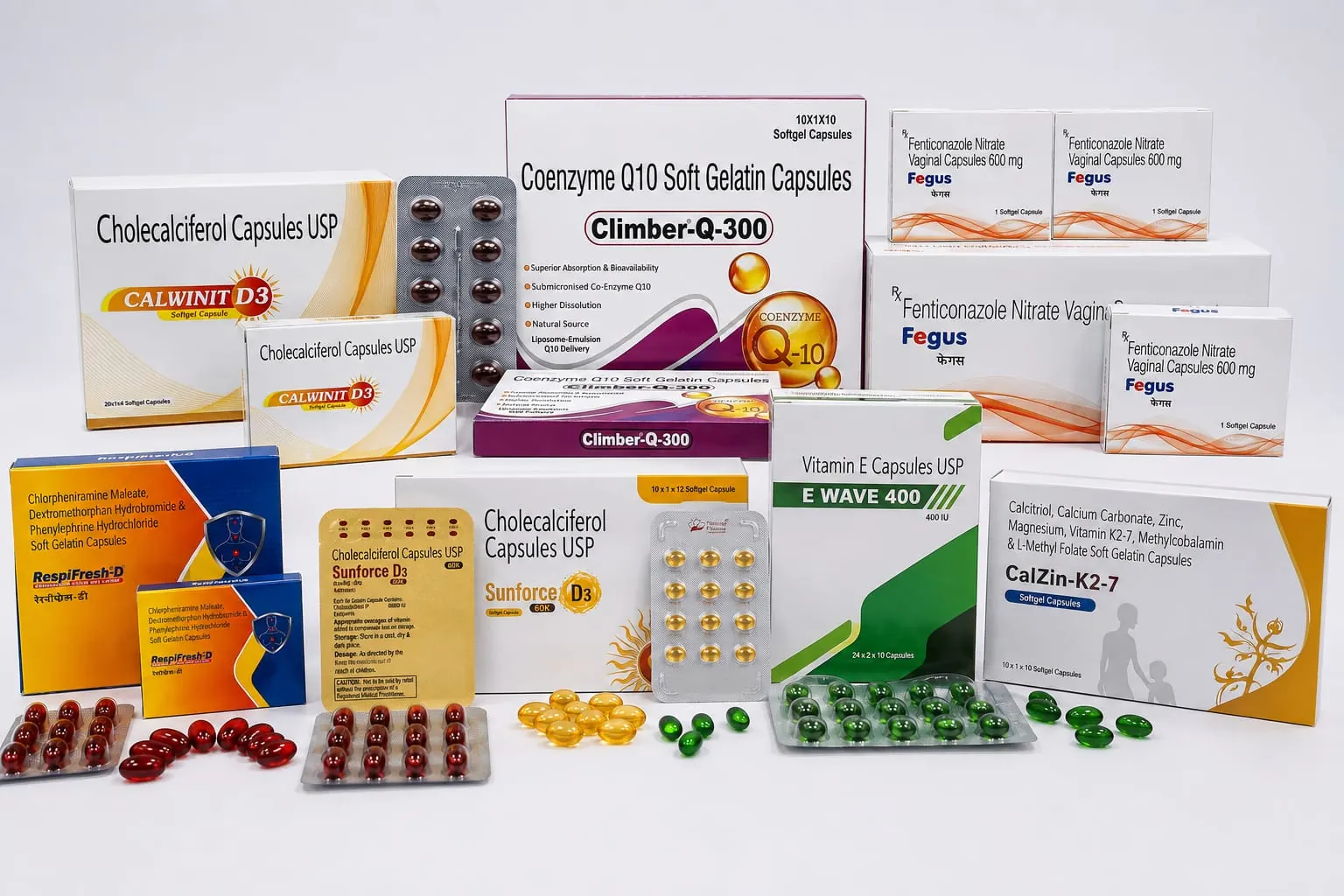
Start where demand is proven — Omega-3 and fish oil, Vitamin D3, Vitamin E, CoQ10, multivitamins or a women’s health line. A private label softgel manufacturer in India will usually have these formulations ready, which shortens your time to market.
Step 2: Fix the product specification
- Composition and strength per capsule
- Shell: gelatin or vegetarian
- Capsule size, shape and colour
- Pack: blister, bottle or both — and pack counts
Ask for samples and judge them as your customer will: appearance, size and how easy they are to swallow.
Step 3: Decide where OEM makes sense
If you want a product competitors cannot pick from the same catalogue — a new combination, a different strength, a vegetarian version — work with a softgel OEM manufacturer on a development brief. It takes longer, so many brands launch with private label and add OEM products later.
Step 4: Artwork and labelling
Prepare carton and label artwork that follows the labelling rules for each market you sell in. Approve final proofs carefully — changes after printing cost time and money.
Step 5: Licences and documentation
Confirm your company holds the licences or registrations required to market the category. Your manufacturer provides product documentation such as a certificate of analysis for each batch.
Step 6: Your first batch
Once formulation, artwork and documents are approved, the batch is manufactured, dried, tested, packed and released. Build drying and quality release into your launch date from day one.
Step 7: Reorders and growth
Share forecasts with your manufacturer so capacity is ready before demand arrives, and review the range each quarter for the next product your customers are asking for.