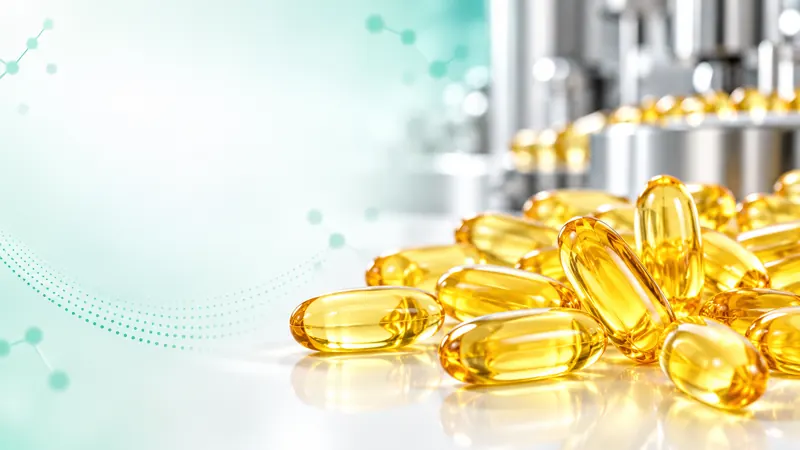

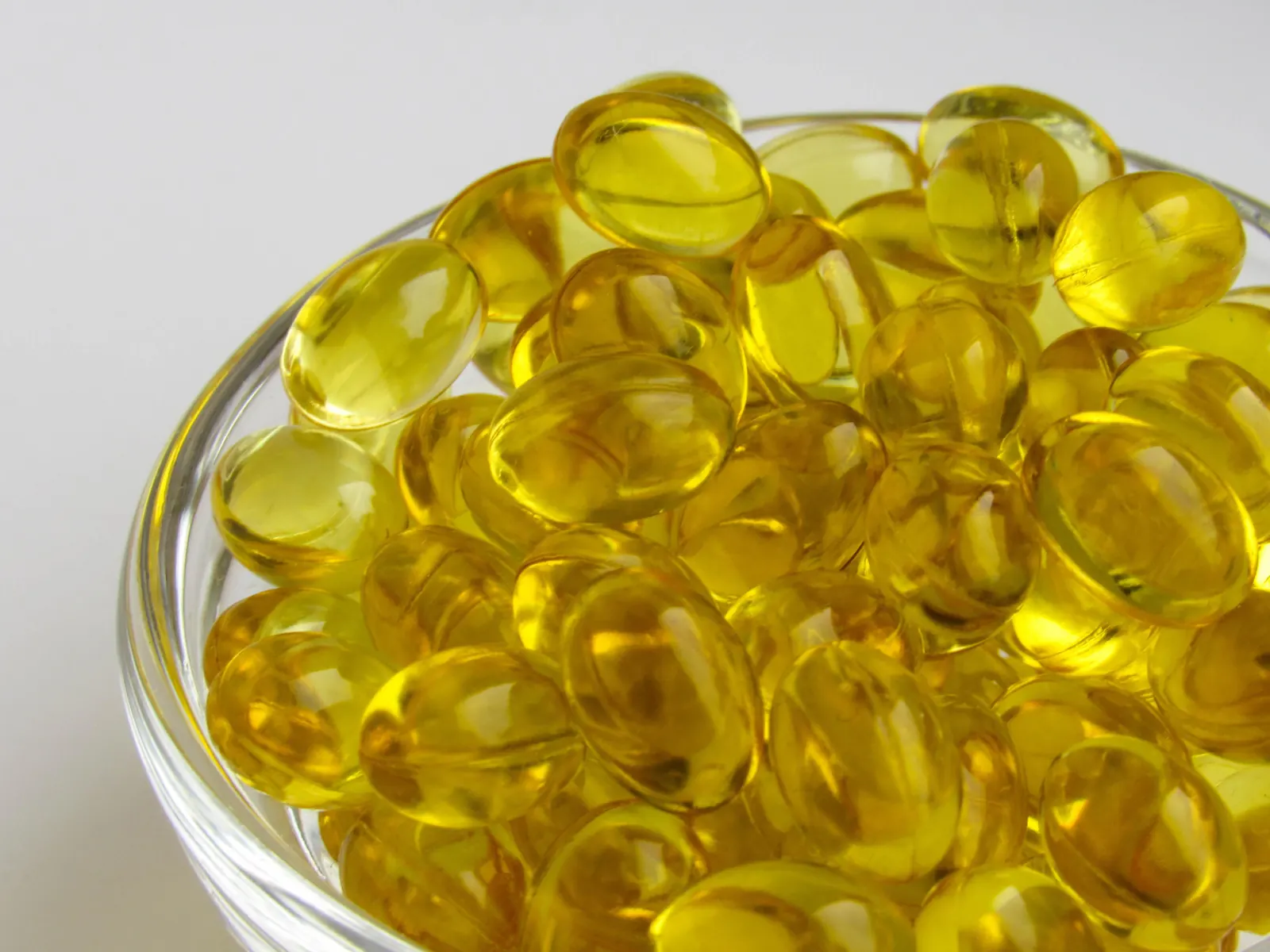
In a softgel plant, the most important moment lasts a fraction of a second: two warm ribbons of gelatin meet between rotating dies, a measured drop of fill is injected, and a sealed capsule falls away. Everything else in the process exists to make that moment work — and to make sure the capsule is still perfect two years later.
- Shell and fill are prepared separately, then formed and sealed in one step.
- Drying is the step that most affects long-term stability.
- Every batch should be inspected, tested and documented before release.
1. Gel mass preparation
Gelatin — or a plant-based system for vegetarian softgels — is melted with purified water and a plasticiser such as glycerin or sorbitol. Colours and opacifiers are added, and the mass is de-aerated and held at a controlled temperature so its viscosity stays consistent.
2. Fill preparation
Oils, solutions or suspensions are weighed, mixed and homogenised so every capsule receives the same dose. Suspensions are milled to keep particles small and even. The fill must be compatible with the shell.
3. Rotary die encapsulation
Two gel ribbons feed between a pair of rotating dies. As the die pockets meet, a metered dose of fill is injected and the halves are sealed into one continuous shell. The dies set size and shape — oval, oblong or round.
The seam on a softgel is where the two ribbons were sealed. On a well-made capsule it is fine and even, not a thick ridge.
4. Drying
Fresh softgels are tumble-dried, then tray-dried in controlled conditions until the shell reaches its target moisture and hardness.
5. Quality inspection
Samples are checked for fill weight, shell weight, seal integrity and appearance; defective capsules are removed; finished product tests are recorded in the batch manufacturing record.
6. Packaging
Released softgels are blister packed, bottle packed or bulk packed and cartoned for domestic, private label or export supply.
Where manufacturing services fit in
When you work with a softgel capsule manufacturing company, you are buying more than machine time: formulation review, trial batches, packaging and documentation all sit around these six steps. See our full softgel capsule manufacturing services.