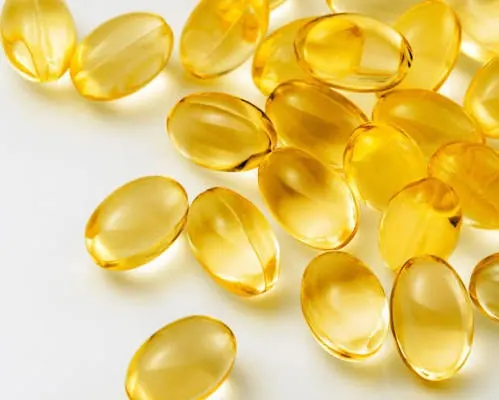

Turn a supplement bottle around and the first ingredient many customers look for is not the vitamin — it is the shell. "Gelatin" or "vegetarian" can decide whether your product goes into the basket. Here is how to make that choice on purpose.
- Gelatin shells: proven, versatile and usually the most economical.
- Vegetarian shells: plant-derived, strong label appeal, higher unit cost.
- Always test your fill on the shell you intend to launch with.
Gelatin softgels
Gelatin forms strong, elastic films that seal reliably and has a long track record across pharmaceutical and nutraceutical products. It offers the widest choice of colours and shapes and is usually the most economical option. It is animal-derived, so it may not suit vegetarian customers or certain dietary requirements.
Vegetarian softgels
Vegetarian softgels use plant-derived shell systems, commonly based on modified starch and carrageenan. They suit vegetarian consumers, clean-label positioning, herbal and Ayurvedic ranges and algal Omega-3. Processing is different from gelatin, some fills need re-evaluation and unit costs are typically higher.
Side by side
| Gelatin | Vegetarian | |
|---|---|---|
| Source | Animal-derived | Plant-derived |
| Positioning | Mainstream, pharmaceutical | Vegetarian, clean label, herbal |
| Fill compatibility | Very broad | Broad — check case by case |
| Relative cost | Lower | Higher |
How to choose
- Start with your customer — vegetarian audiences and herbal brands benefit from plant-based shells.
- Check your markets — labelling and dietary expectations differ by country.
- Test the fill — run compatibility and stability samples on your chosen shell.
- Model the cost against the price premium the positioning allows.
We manufacture on both Gelatin and Vegetarian softgel platforms — useful if you are comparing both for the same nutraceutical softgel product.